America the (Un)Beautiful
I grew up amongst the maelstrom of confusion that was the 1970s. Every generation says the same thing about their own time, but the 1970s, anyone would have to admit, were in a class of their own. It goes without saying the 1960s were a tough act to follow and perhaps, due to this, the 1970s are destined to rest on a confused legacy for eternity. During this time, my father was the world to me (not that he wasn't later, but we did have our clashes on and off for many years). He was a Korean War hero, decorated more times than I could possibly recount here, but probably just as many as the times he was stopped at airports metal detection stations because of the shrapnel he still carried on him. I don't say this to augment his image--this man was really something else. As his only male heir to the namesake, he instilled in me great American values: love of country, sacrifice for a cause larger than one's self, pride in the traditions of our history as a nation, etc. I had no reason to doubt him, after all, he was a god among mortals. But what my father failed to understand was that he, of all people to hold these ideas close to his heart, was probably, by virtue of heritage and race, the last person you would have expected to embrace this idealism with all of his heart. He failed to see, or even understand that his accent, his name and his skin color rendered him "foreign" to those same Americans he fought so hard to defend against the evils of communism. He never bragged about his military record; he never carried his Silver and Bronze Stars, three Purple Hearts, Commendations for Valor, etc. on his sleeve, so how were these people supposed to know they were not in front of an immigrant but rather a true American hero in the truest sense of the word? They never knew.
We grew up (and with "we" I mean my entire nucleus family) outside the diaspora, as far as possible from our people. Early on, I went to public schools where the idea of diversity was brunettes versus blondes. I was never told to feel any different, and I actually never did--my complexion was just about right, as if by some complicated miracle of science my environment was my destiny. Of course my name gave it away, but what did my friends care about last names back then? Besides I was good at baseball, that most American of all sports, and excelled in other school activities. It wasn't until friends came to our home for a visit that they realized they were carousing around with aliens. Needless to say, this was a confusing time for a boy in his pre-teen years to try and investigate his own identity and what it meant in the face of all others.
The day my Americanism arrived for "good," (just like a long awaited birthday gift your grandmother sent but got lost in the mail for two or three weeks), I was around 12 or 13 years old. I was in 7th grade, in Mr. Daniel Light's American history class (imagine that, his desk had one of those official looking name displays that said "D. Light"), and came across a particularly interesting ad on (of all places) a Scholastic Magazine. It was a United States Marine Corps recruitment ad. The photograph showed a variety of Black, Hispanic, White and even a Native American men (ironically enough my first encounter with "diversity") all clad in the distinctive Marine Corps dress blues--probably one of the most coveted military uniforms in the world. The caption to the photograph was like a shot of penicillin to my heart infected with doubts about my identity as an American "other." The caption read, "The wrong team to be on the wrong side of." I was hooked. This was around the same time the cult B-film "The Warriors" was making its original rounds in the movie houses, and just about every kid my age wanted to be in some sort of "gang." To me, the Marines offered everything I needed: a "good" gang to be on... they even had cool uniforms, like the gangs in the film. I was hooked, and I couldn't wait until I graduated from high school to enlist. The Marines offered something else as well: my father's "America First" philosophy and ideology but in a form I could make my own and understand in my own way.
Semper Fi and All that Jazz
I don't have to regurgitate the years I spent as a U.S. Marine, and, to be completely frank, I feel now like my father must have felt back then... "There's no need to talk about it. If people want to know, they'll ask you about it." Nothing was a truer dictum to me as my father's silence about his honored military service. I confess I got a bit more than I bargained for having served during the late 1980s and the top part of the 1990s, but I am not even close to start bitching about it. Friends and past girlfriends always said that I sounded like a broken record when asked about my military service; I nearly always gave people the same line, "Shit, when I signed up, Reagan and Gorbachev were kissing on television... and a kissing war was a war I could deal with." The real gift I take away from the experience is my father's ultimate pride and admiration for what I had done. There were not enough words for him to say how proud he was when I came home from boot camp--this served him just right, since he was never one to tell what he felt, even when it came to love and pride.
But the years following my military service were full of confusing ideas. The world I now inhabited (college) was a world divided along ideology lines... those were days of "roller coaster" ideologies: false ideas, liberals vs. conservatives, cultural inclusivism and diversity, culture wars, and to top it all off, I was in the great state of Ohio... about as far from the diaspora as I could get. Because of my name I was often asked if I had served in the (name of country here) marines, to which I always responded, "No, I served in the United States Marines." For most of my years in college, and later in graduate school, I was "pigeon holed," put inside the slot of ethnicity and not allowed to come out. Whether professors knew what they were doing, or they were still living the "Love Fest" of the 1960s, I never was able to draw a clear explanation. If up to that point I had had questions about identity and self, these very same questions were accented and augmented 110% because of this. Those years, I felt I was not simply living outside the diaspora, but I was in some sort of permanent exile with no ticket home or even a road map to trace my steps back. I have commented before how education is a double-edged sword; what it gave me to expand my mind, also drove me away to a precipice of cultural, political and ethnic identity. It was a dark hole, that, as Hamlet states of the mystery of death, "no traveler returns," and I don't have to quote the bard again to know that it "puzzles the mind" to no end. I was finally able to find my way "home," when I arrived once again in the classroom... this time as a teacher.
As I began my career after graduation, and I was permitted the GREAT PRIVILEGE of teaching and helping young minds grow. I swore in front of God and the picture of my father, that I would never teach a specific ideology, I would never allow students to know where I stood on the issues of our times. On the contrary, I wanted to present my students with clear, logical, reasonable ways of understanding both "sides of the coin." I wanted to help them become critical thinkers in the truest sense of the word. This leads always to a clearer picture of Americanism, one that those interested in teaching from the "Left" or the "Right" simply ignore, and, as a result, border on the brainwashing and indoctrination rather than teaching. America has not only lost its way because we are divided by ideologies, but also because as a nation we continue to saturate ourselves with the banal, the trivial, the fad-infested media whose, it seems, only message is that of "planned obsolesce" and complete hedonism. To put it in context (and also in a nutshell), is it me, or are they coming up with a new cellphone every week?
While the Volunteers Slept
As a people, I think it is an understatement to say that Americans have gone a transformation (more like a dark transfiguration). It isn't simply the changes that were ushered on that clear sky Tuesday in September, but looking back a decade before we had already begun the mutation. The 1990s were sort of the 1980s reversed, at least culturally. The United States ushered a historic era of economic surplus, and the lowest unemployment levels since the resuscitation of the American economy during and after World War II. Who cared whether or not Bill Clinton was guilty of personal transgressions? We were willing to suspend our ethics, as long as the economy was strong, the Internet was taking over society as a new form of expression and entertainment, and after "Desert Storm," and the fall of the Soviet Union we reigned supreme as the "only" super power. Whether the new Millennium was about to change all of that or not, we, for the most part, were not interested. The times were "cool," again, and we had our own little response to "The Greatest Generation," in the "Generation X" population. These were the computer wizards, the nerds and geeks that came back to kick sand on the sport jocks of their high school years during the 80s. "They," Tom Brokaw would later state, "came in with the newest ideas, the greatest innovations since Henry Ford and the Wright Brothers and really changed America for the better." A sweeping generalization? Perhaps. What Brokaw failed to notice was that no one was "paying attention." While we basked on the comforts of a new technological America, we were leaving many on the outside looking in, and their resentment was to eventually hit a historic boiling point. When referring to "those on the outside looking in" I am not simply gathering the "enemies," but also those within our society that were left to shoulder the traditions my father taught me at an early age. I am talking, of course, of those who serve our country in the military. They are the ones now shouldering the traditions I have begun to lose one droplet at a time, every day. This is an entirely volunteer force of young people that (perhaps as inspired as I was when I noted that Scholastic Magazine ad) has gone beyond the call to serve four or five tours of duty in Iraq or Afghanistan. Away from family and friends, they miss anniversaries, birthdays, deaths in their families, Little League baseball seasons and school graduations. They do this voluntarily. They are the ones now helping me keep the very thin layer of faith I still have in this country, they stop the leaking faucet of my ill-fated American identity. In the same token, they are the ones unknowingly supporting a system of government that's being abused by corporate magnates while elected officials look the other way. If September 11th brought America to its knees, September 12th acted almost as an open gate to the excesses of capitalism, and the mass of unethical executives just "dying" to make a "kill" was on the rise. The American economic meltdown was just around the corner.
The Final Draw of my "American" Patience
This past week I underwent another mutation of my traditional American identity. We've been suffering the economic meltdown since 2008, and, playing around a 10% or more unemployment rate while high executives in all sorts of American financial sectors continue to bask in their safe bubble having landed on their feet with the help of their Golden parachutes. Again, I am not saying I am against capitalism, but I am categorically opposed to its excesses. Why? Because this excess is an insult to American work ethic and the integrity of the traditional American worker. When people complain about their jobs being sent to Mexico or China, most of them miss half of the equation. Why do corporations seek to reduce the cost of their labor in manufacturing or even servicing their customers? Ever wonder where the aforementioned Golden parachutes come from? Now, now... does a CEO really need to make $24 million a year, plus other financial incentives to boot, even if the company fails and goes bankrupt? At the cost of what? American jobs? Is it in the name of "cheap labor" (which, as a matter of fact, includes its own list of ethical guidelines and problems)? Bernard Madoff's numbers game earned him figures in the excess of $90 billion... if that isn't an excess, I don't know what is.
Last week, Goldman Sach executives "testified" in front of Congress. I put the quotations there because the hearings were really a travesty, a slap in the face of any American making a sacrifice, either serving overseas in the military or flipping burgers in the joint down the street to support their families (because it is the only job they can find). Sure, it was entertaining to see Senator Carl Levin repeat "shitty deal" over and over again, and that caught most of the sound bites, but consider that the executives of Goldman Sachs did not answer a single question they were asked during the hearings. Their language was so couched in legal jargon and generalizations that the impression they made was that of having been coached by their attorneys for probably months in advance. No answers made to probably the main factor that fueled the economic melt down: "shitty" mortgages resold and shoved down investors' throat when they were knowingly labeled "shitty" by those same executives. It is perhaps the world's most suggestive and loaded statement to say that America has lost its way. There's no "way" anymore. The ethical void in American politics and economics hammered the final nail in the coffin of my American identity. It makes me want to vomit to admit that I am part of this circus and extravagant buffet of lies, but part of it I am... by identity, definition, and by my father's unending faith in this nation. I am an American lost in this wilderness, this sea of confusion and endless nightmares.
This is the first and last post I am writing on this blog regarding American politics or economy. I got it off my chest now... could
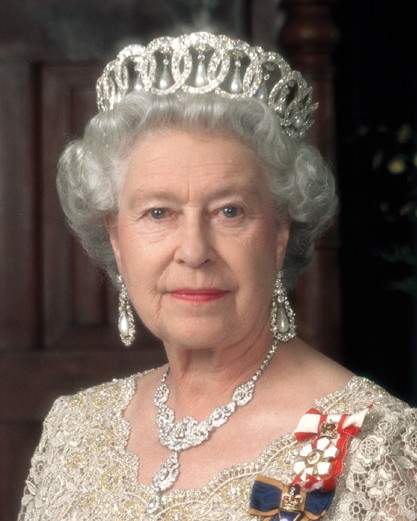
this Lady hold the answer to my loss of traditions and identity crisis? Or could
this man? So long to the idea of "Americans bow to no monarch." It seems much easier to believe in traditions this way.
Labels: Americanism, culture, economic meltdown, identity, traditions